
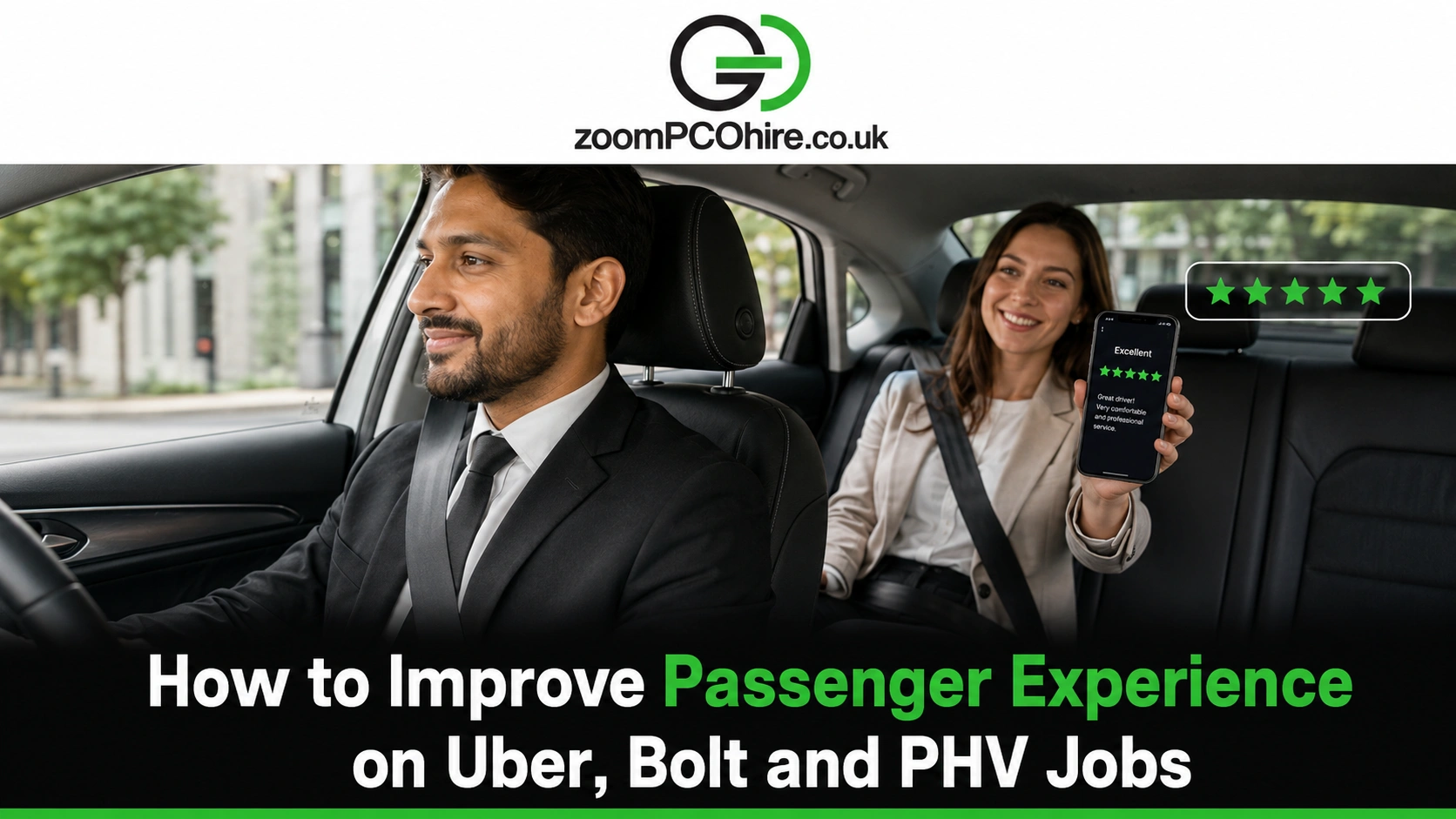
For PCO and PHV drivers, ratings are not just about being friendly. They reflect the full passenger experience, from pickup and driving style to comfort, safety, communication and how professionally you handle problems.
A good passenger experience can help drivers build trust, reduce complaints and work with more confidence over time. This guide is written to stay useful long term, even if app features or platform rules change, because the basics of good private hire service are always the same: clean car, safe driving, clear communication and professional behaviour.
The same principles apply whether you drive for Uber, Bolt, a local private hire operator or a mix of platforms. Official guidance for taxi and PHV licensing in England places public safety at the centre of licensing, while Uber and Bolt both connect ratings and behaviour with safe, respectful, high-quality journeys.
For drivers who want a comfortable, reliable vehicle for daily PHV work, Zoom PCO Hire offers PCO car hire and rent to buy PCO cars across England.
Why ratings matter for PCO and PHV drivers
Ratings are a simple way for passengers to share how the journey felt. A passenger may not understand every part of private hire work, but they will remember if the car was clean, the pickup was confusing, the driver was polite, or the journey felt uncomfortable.
Ratings build passenger trust
Passengers often feel more confident when the driver appears professional. A clean vehicle, calm driving style and respectful communication all help create trust before the journey even finishes.
Ratings can support long-term earning confidence
It is best not to rely on exact platform rules or rating thresholds because they can change. But in general, better passenger experience can help reduce complaints, build stronger habits and support more consistent work.
Bolt’s passenger support page explains that ratings help maintain safe, high-quality service, which shows why the rating system matters beyond one single journey.
Ratings reflect the full journey, not just the car
A passenger rating is often based on the whole experience:
- How easy the pickup was
- How the driver greeted them
- How clean and comfortable the car felt
- How smooth the driving was
- Whether the driver respected their preferences
- How professional the drop-off felt
This means small habits can make a big difference.
Start with the basics: clean car, calm driver, safe journey
Before thinking about advanced customer service, start with the foundations. Most low-rated journeys happen because something basic went wrong.
Keep the car clean without overcomplicating it
A clean car gives a strong first impression. Passengers notice dirty seats, bad smells, clutter, food wrappers, dusty dashboards and no boot space.
You do not need a full valet before every shift. A simple routine can help:
- Wipe the dashboard and door handles
- Clear rubbish after trips
- Shake or clean floor mats
- Keep the boot ready for luggage
- Avoid strong air fresheners
- Check seats before starting work
For a simple daily routine, read How to Keep Your PCO Car Clean: Better Ratings in 10 Minutes a Day.
Make the cabin feel comfortable
Comfort does not mean luxury only. It means the passenger feels relaxed and respected.
Check:
- Temperature is reasonable
- Seats are clean
- No strong smell
- Music is not too loud
- Boot has space
- Phone cables and personal items are tidy
- Windows and mirrors are clean
A comfortable car is especially important for airport runs, late-night journeys, business trips and longer PHV jobs.
Drive smoothly and safely
Driving style is one of the strongest rating factors. A passenger may forgive traffic, but they are less likely to forgive harsh braking, aggressive acceleration, tailgating or sudden lane changes.
Good driving habits include:
- Leave safe distance
- Brake gently
- Avoid sharp acceleration
- Follow speed limits
- Indicate clearly
- Keep calm in traffic
- Avoid risky shortcuts
UK government statutory taxi and PHV standards are focused on protecting passengers, and the wider licensing guidance makes public safety the main objective of licensing authorities.
Communication habits that improve passenger experience
Good communication does not mean talking too much. It means saying the right thing at the right time.
Use a polite greeting
A simple greeting makes the journey feel more professional.
Example:
“Hi, are you Ahmed? Going to Manchester Piccadilly?”
This confirms the passenger and destination without sounding robotic.
Confirm details without overdoing it
For short city journeys, a simple confirmation is enough. For airports, hotels, business pickups or station jobs, a little extra clarity can prevent confusion.
You can ask:
- “Is this the best drop-off point for you?”
- “Would you like the main entrance?”
- “Do you have any luggage for the boot?”
- “Is the route showing on the app okay for you?”
Keep it short, polite and useful.
Ask before changing music, temperature or route
Passengers may not complain directly, but they may rate lower if they feel uncomfortable.
Simple questions help:
- “Is the temperature okay for you?”
- “Would you like the music lower?”
- “The app is showing traffic ahead. Are you happy for me to follow the alternative route?”
This gives passengers a sense of control.
Keep conversation balanced
Some passengers like to talk. Others want silence. A good driver reads the situation.
Signs a passenger may want quiet:
- They are on the phone
- They are working
- They give short answers
- They have headphones on
- They seem tired
A professional driver does not force conversation. Polite silence is often better than too much talking.
Pickup and drop-off tips that reduce complaints
Pickup and drop-off are often where complaints start. The passenger may already be stressed, late, cold, carrying luggage or unsure where to stand.
Stop safely and legally
Never stop in a way that puts the passenger, other road users or yourself at risk. A safe pickup is better than a rushed pickup.
Avoid:
- Blocking traffic
- Stopping suddenly
- Waiting in unsafe places
- Forcing the passenger to cross busy roads unnecessarily
- Arguing about pickup restrictions
Communicate clearly if the pickup point is difficult
Busy locations can be confusing, especially:
- Airports
- Stations
- Hotels
- Shopping centres
- Event venues
- High streets
- Hospitals
A short message can help:
“I’m outside the main entrance near the taxi pickup sign.”
“Traffic is restricted here, so I’m waiting safely around the corner.”
Clear communication reduces frustration.
Help with luggage when suitable
You do not need to overdo it, but helping with luggage can improve the passenger experience, especially for:
- Airport passengers
- Elderly passengers
- Family bookings
- Business travellers
- Passengers with heavy bags
Only help when it is safe and appropriate.
End the trip professionally
The final impression matters. A simple ending is enough:
- “Thank you, have a good day.”
- “Thanks, enjoy your flight.”
- “Take care.”
A calm, polite drop-off can leave the passenger with a positive feeling.
How to handle delays, traffic and route issues professionally
Traffic is not always your fault, but your reaction to traffic affects the passenger experience.
Stay calm when traffic is bad
Passengers usually judge the driver’s behaviour more than the traffic itself. Avoid sighing, complaining, arguing with other drivers or blaming the app.
A calm driver makes the journey feel safer.
Explain route choices simply
Do not over-explain. Just give useful information.
Example:
“There’s heavy traffic ahead, so the app is suggesting a faster route. I’ll follow that unless you prefer the original route.”
This sounds professional and avoids arguments.
Do not blame the passenger or the app
Even if the pickup point is awkward or the route is bad, blaming the passenger or the app makes the trip feel negative.
Better wording:
“This area is a bit restricted, so I’ll stop at the nearest safe point.”
Use navigation wisely
Navigation is useful, but drivers still need common sense. Do not follow a route that is unsafe, illegal or clearly unsuitable.
The best approach is to combine navigation with safe driving and local awareness.
How to avoid passenger complaints
Most complaints can be avoided by staying calm, respectful and consistent.
Avoid arguments
Arguments almost never help. Even when the passenger is wrong, keep your tone controlled.
Use short replies:
- “I understand.”
- “Let me check that safely.”
- “I’ll follow the app route unless you prefer another legal route.”
- “I can stop where it is safe to do so.”
Keep boundaries clear
Avoid sensitive topics unless the passenger clearly starts a light conversation and it stays respectful.
Be careful with:
- Politics
- Religion
- Personal comments
- Passenger appearance
- Relationship questions
- Money or private matters
A professional driver keeps the focus on the journey.
Respect passenger privacy
Do not ask unnecessary personal questions. A passenger may be travelling for work, medical reasons, family issues or a private event.
Respectful silence can be part of good service.
Report serious issues properly
If something serious happens, use the correct platform or operator process after the trip. Keep your notes clear and factual.
Uber’s Community Guidelines focus on respect, safety and following the law, which makes calm and professional behaviour important for both drivers and passengers.
Difficult passengers: what PCO drivers should do
Not every journey will be easy. Some passengers may be rude, drunk, stressed, angry or unreasonable. The key is to protect your safety and avoid escalation.
Stay calm and avoid escalation
Do not match the passenger’s tone. Keep your voice calm and your answers short.
Avoid:
- shouting back
- sarcasm
- personal comments
- threats
- long arguments
Keep the journey safe
Your first responsibility is safety. If the passenger is distracting you, aggressive or creating risk, focus on stopping safely and following the correct process.
Do not continue if you feel unsafe
No rating is worth risking your safety. If you feel unsafe, follow the platform/operator guidance and stop in a safe, legal place where appropriate.
Document serious incidents after the trip
After the trip, write down:
- time and location
- what happened
- what was said
- any safety concern
- whether the passenger caused damage
- whether you contacted support
Keep it factual. Do not exaggerate.
Use in-app support where available
When working through platforms, use the official support process. When working for an operator, follow their reporting process.
The right car also helps your ratings
A driver’s behaviour matters most, but the vehicle also plays a big role in passenger comfort.
Comfort matters on longer trips
Rear legroom, quiet cabin, smooth ride and good air conditioning can improve the passenger experience, especially on longer journeys.
This matters for:
- Airport runs
- Business travel
- Late-night journeys
- Family bookings
- Comfort-style trips
Boot space matters for airport jobs
A car with poor boot space can create stress when passengers have luggage. If you often do airport work, choose a car that can handle bags properly.
Reliability matters because delays create frustration
Breakdowns, warning lights and repeated vehicle issues can lead to cancelled jobs, late pickups and poor passenger experience.
A reliable car helps protect both earnings and ratings.
For compliant vehicle options, explore PCO car hire or compare longer-term rent to buy options.
Simple daily checklist before starting a shift
Use this quick checklist before your first job of the day:
- Seats clean
- Floor mats tidy
- Boot space available
- No strong smell
- Phone mount ready
- Charger working
- Navigation working
- Tyres and lights checked
- Fuel or charge level planned
- Windows and mirrors clean
- Calm mindset before the first pickup
This takes a few minutes, but it can prevent many complaints.
Passenger experience
| Passenger touchpoint | What drivers should do | Why it helps ratings |
|---|---|---|
| Pickup | Arrive safely, confirm the passenger and keep communication clear | Reduces confusion and starts the trip professionally |
| First impression | Keep the car clean, fresh and comfortable | Passengers often judge the trip within the first minute |
| Driving style | Drive smoothly, avoid harsh braking and follow road rules | Creates a safer and calmer journey |
| Communication | Be polite, clear and not overly chatty | Helps passengers feel respected |
| Comfort | Ask before changing temperature, music or route | Gives passengers more control over the journey |
| Drop-off | Stop safely, help with luggage when appropriate and end politely | Leaves a strong final impression |
Common mistakes that can lead to lower ratings
Even good drivers can lose ratings because of small repeated mistakes. These are the main ones to avoid.
- Dirty car or strong smell
- Harsh driving
- Ignoring passenger preferences
- Being too talkative or too blunt
- Arguing about routes
- Poor pickup communication
- No boot space for luggage
- Cancelling or delaying without clear reason
Final thoughts
Good ratings come from consistent professional habits. You do not need to be perfect on every journey, but you should aim to be clean, calm, safe, respectful and reliable.
A better passenger experience starts before the pickup, continues through the journey and finishes with a professional drop-off. The right vehicle also helps, especially for comfort, luggage space and reliability.
Zoom PCO Hire helps drivers across England compare PCO car hire and rent-to-buy options that support everyday PHV work.
Frequently Asked Questions
How can PCO drivers improve passenger ratings?
PCO drivers can improve ratings by keeping the car clean, driving smoothly, communicating clearly, respecting passenger preferences and staying calm during delays or difficult journeys.
What affects Uber driver ratings?
Uber driver ratings can be affected by the passenger’s overall experience, including pickup communication, car cleanliness, driving style, comfort, professionalism and how the driver handles route or delay issues.
How can Bolt drivers improve their ratings?
Bolt drivers can improve ratings by offering a safe, comfortable and respectful journey. Bolt explains that ratings help maintain safe, high-quality service, so drivers should focus on consistent passenger experience.
Can a clean car improve passenger ratings?
Yes. A clean car creates a strong first impression and helps passengers feel more comfortable. Clean seats, tidy floor mats, clear boot space and a fresh cabin can all support better feedback.
How should PCO drivers handle difficult passengers?
Stay calm, avoid arguments, keep the journey safe and use the correct platform or operator reporting process after the trip. Do not continue a journey if you feel unsafe.
What should drivers do if a passenger complains?
Stay professional, avoid arguing, keep records of serious issues and follow the support or complaint process used by the platform or operator.
Does driving style affect passenger ratings?
Yes. Smooth, safe driving can improve comfort and trust. Harsh braking, sudden acceleration and aggressive driving can make passengers feel unsafe and may lead to lower ratings.
Should PCO drivers talk to passengers?
A polite greeting is important, but drivers should not force conversation. Some passengers like to talk, while others prefer a quiet journey. A professional driver reads the situation.
Can the right car help improve ratings?
Yes. A comfortable, clean and reliable car can improve the passenger experience, especially on airport trips, longer journeys and business travel.
What is the best daily checklist for PCO drivers before starting work?
Check that seats are clean, floor mats are tidy, boot space is available, the cabin smells fresh, navigation is working, phone mount is ready, tyres and lights are checked, and fuel or charge level is planned.
How can PCO drivers improve passenger ratings?
PCO drivers can improve passenger ratings by focusing on the basics that passengers notice on almost every journey:
- Keep the car clean, fresh and comfortable
- Drive safely and smoothly
- Greet passengers politely
- Confirm pickup and drop-off details when needed
- Ask before changing music, temperature or route
- Help with luggage when appropriate
- Stay calm during traffic, delays or difficult situations
- Respect passenger privacy
- Follow platform and licensing rules
- Report serious issues through the correct process
The goal is not to overdo the service. The goal is to make every trip feel safe, smooth and professional.
