
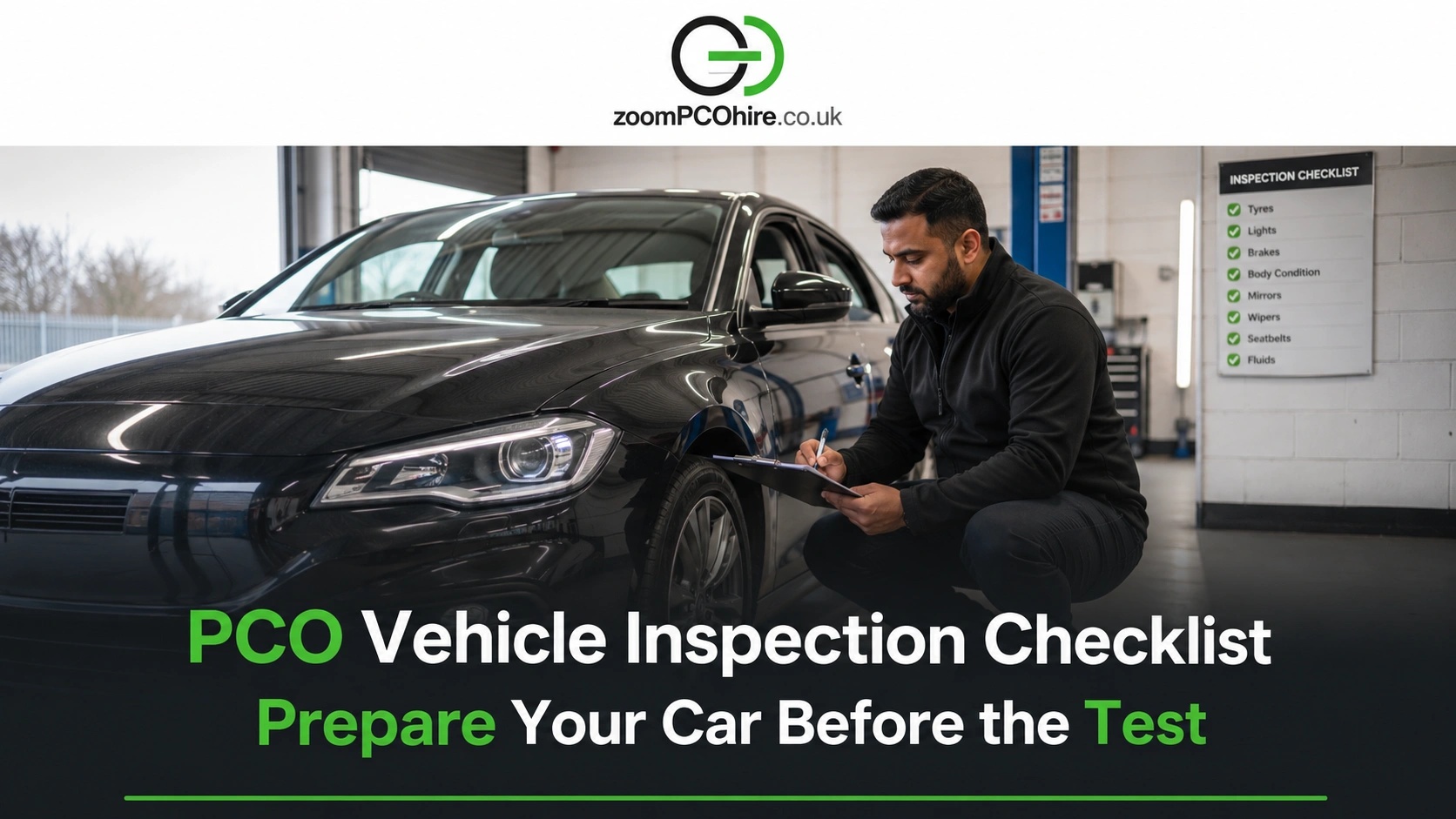
A PCO or private hire vehicle inspection can decide how quickly you get on the road. If your car fails, it can mean repair costs, re-test delays, lost working days and extra stress with Uber, Bolt, your operator or your licensing authority.
The good news is that many inspection problems are avoidable. Tyres, lights, warning lights, seatbelts, bodywork, documents and cleanliness can all be checked before test day. A little preparation can protect your time, your income and your confidence.
This guide is for PCO, PHV, Uber, Bolt and private hire drivers across England. Requirements can vary by council or TfL, so always check your own licensing authority’s instructions before the test.
UK Government says taxi or private hire vehicle licence applications are made to the licensing authority where you plan to work, and the authority can refuse the application if the vehicle does not meet its criteria.
For drivers who want a ready-to-work vehicle, Zoom PCO Hire also offers PCO car hire and rent to buy PCO cars across England.
How do you prepare a PCO car for inspection?
To prepare a PCO or PHV car for inspection, check the car one week before the test and fix obvious problems early.
Before inspection, make sure you:
- Check your council or TfL vehicle inspection rules
- Confirm your MOT, insurance and vehicle documents are ready
- Check tyres, brakes, lights, mirrors and windscreen
- Clean the interior, seats, boot and exterior
- Fix warning lights, body damage and obvious safety issues
- Check seatbelts, doors, windows and child locks
- Confirm emissions and Clean Air Zone suitability where relevant
- Arrive on time with all required paperwork
- Do not present a car with known safety faults
A private hire inspection is not just a formality. It is there to make sure the car is safe, suitable and ready for passenger work.
What is a PCO or private hire vehicle inspection?
A PCO or private hire vehicle inspection is a check carried out before a car is licensed or renewed for private hire work. The exact process depends on your local council or TfL.
Vehicle inspection vs normal MOT
A normal MOT checks basic roadworthiness. A private hire vehicle inspection can go further because the car is being used for passenger work.
An MOT may check things like lights, brakes, tyres, steering, suspension, seatbelts, emissions, mirrors, doors, body condition and visibility.
A private hire inspection may also look at:
- passenger comfort
- interior cleanliness
- bodywork presentation
- licence plate or signage rules
- local vehicle conditions
- emissions or age requirements
- suitability for carrying passengers
So, a valid MOT is important, but it does not always mean the vehicle is automatically ready for PHV licensing.
Who carries out the inspection?
This depends on your area. It may be:
- a council-approved inspection centre
- an approved garage
- a licensing authority test centre
- the TfL process in London
Always read your appointment instructions carefully because each authority can have different rules.
Why inspection rules vary across England
Private hire licensing is local. Outside London, drivers normally apply through the local council. In London, private hire licensing is handled by TfL. UK Government also explains that the driver, vehicle and operator for PHV work normally need to be licensed by the same authority.
This is why you should never rely only on generic advice online. Use this checklist as preparation, but always follow your own licensing authority’s requirements.
PCO vehicle inspection checklist: what to check before the test
This is the main part of your preparation. Go through each area carefully before inspection day.
Tyres and wheels
Tyres are one of the most common things drivers forget until the last minute. Do not only look at one tyre. Check all four tyres properly.
Check:
- tread depth
- uneven wear
- sidewall cracks or bulges
- tyre pressure
- slow punctures
- wheel damage
- missing valve caps
- spare wheel or repair kit if required
If your tyres are close to the legal limit, do not wait until test day. Private hire driving adds mileage quickly, so weak tyres can become a bigger problem fast.
Brakes
Brakes are a safety-critical item. If the car pulls to one side, makes grinding noises or shows a brake warning light, get it checked before inspection.
Check:
- brake pedal feel
- handbrake or parking brake
- brake warning lights
- brake fluid level
- unusual noise
- vibration while braking
- pulling to one side
Never present a car for inspection if you already know the brakes are not right.
Lights and indicators
Faulty lights are easy to miss, but they can cause inspection issues.
Check:
- headlights
- side lights
- brake lights
- indicators
- hazard lights
- reverse lights
- fog lights
- number plate lights
- dashboard warning lights
Ask someone to stand behind the car while you test the brake lights and reverse lights. This takes two minutes and can save a failed inspection.
Windscreen, mirrors and wipers
Private hire drivers spend long hours on the road in different weather. Visibility must be clear.
Check:
- windscreen cracks or chips
- wiper blade condition
- washer fluid
- rear-view mirror
- side mirrors
- demister
- rear window visibility
- screenwash jets
A cracked windscreen, weak wipers or broken mirror can create a safety issue and delay approval.
Seatbelts, seats and doors
Passengers need to enter, sit and leave the car safely.
Check:
- all seatbelts pull out properly
- all seatbelts lock and release
- no torn or damaged belts
- seats are fixed securely
- seat backs lock properly
- doors open and close smoothly
- windows work
- child locks work where relevant
Also check the rear seats. Drivers often focus on the front, but passengers spend most of the journey in the back.
Bodywork and exterior condition
A PHV car should look safe and presentable. Minor cosmetic marks may not always be a problem, but serious damage can affect approval.
Check:
- sharp edges
- cracked bumpers
- loose panels
- damaged mirrors
- broken trims
- number plates
- major dents
- unsafe body damage
- exterior cleanliness
UK Government’s MOT guidance includes checks around body condition and sharp edges that may cause injury, which is another reason to deal with visible damage early.
Interior condition and passenger comfort
A private hire vehicle is not just a car. It is your working environment and the passenger’s travel space.
Check:
- clean seats
- tidy floor mats
- no strong smells
- no loose objects
- clean dashboard
- clean door handles
- working air conditioning and heating
- clear boot space
- no damaged trim that affects passengers
A dirty or uncomfortable interior may not always be a mechanical failure, but it can still affect passenger confidence and the overall inspection impression.
Emissions and warning lights
Warning lights should never be ignored before inspection.
Check for:
- engine management light
- ABS warning
- airbag warning
- tyre pressure warning
- brake warning
- EV or hybrid system warning
- emissions-related faults
- DPF or AdBlue issues on diesel vehicles where relevant
If the car has an emissions or warning light issue, get it checked before the test. Also make sure the vehicle is suitable for your working area, especially if you drive in Clean Air Zones.
Documents to take to a private hire vehicle inspection
The exact documents depend on your council or TfL, but drivers should prepare paperwork early.
Common documents may include:
- V5C/logbook or keeper document where required
- valid MOT certificate
- private hire insurance certificate
- vehicle licence or renewal paperwork
- inspection booking confirmation
- proof of ID or address if required
- hire or rent to buy agreement if the vehicle is not owned by you
- previous inspection report if it is a re-test
- emissions, ULEZ or Clean Air Zone evidence where relevant
Do not leave this until the morning of the test. Missing or incorrect paperwork can delay the process even if the car itself is ready.
Common reasons PCO cars fail inspection
Many inspection failures come from simple problems that could have been checked earlier.
- Tyre problems
- Lights not working
- Dashboard warning lights
- Body damage
- Interior problems
- Missing or incorrect documents
What happens if your PCO car fails inspection?
A failed inspection is frustrating, but it is not the end of the road. The main thing is to act quickly and properly.
Read the failure report carefully
Do not guess what went wrong. Read the report and identify the exact failure items.
Ask questions if something is unclear.
Fix the issues properly
Avoid temporary fixes. Use a reliable garage and keep invoices for the work.
For example, if the car failed because of tyres, lights or brakes, get the repair done properly before re-test.
Book the re-test quickly
Delays can mean lost working days. Ask the licensing authority how the re-test process works and book as soon as the car is ready.
Do not work until the vehicle is approved
Government warns that you can be prosecuted if you use a vehicle as a taxi or PHV after the vehicle licence has expired.
If your vehicle has failed inspection or is not licensed, do not use it for private hire work until it is approved.
Car Hire or rent to buy vehicle: who is responsible for inspection readiness?
| Vehicle setup | What drivers should check | Why it matters |
|---|---|---|
| PCO car hire | Is the car already PHV-ready? Is MOT included? Is servicing included? Who handles inspection preparation? What happens if the car fails inspection? Are tyres and brakes covered? Is replacement support available? Who books the inspection? | A good hire setup can reduce stress, especially for new drivers who do not want to manage every vehicle detail alone. Learn more about PCO car hire. |
| Rent to buy PCO car | Who pays for servicing? Who handles repairs? Who keeps records? What happens if the car fails inspection? Is maintenance support included? How is licence renewal handled? What does the agreement say about damage and wear? | Rent to buy can suit long-term drivers, but you still need to understand your inspection, maintenance and repair responsibilities. Explore rent to buy PCO cars. |
| Records to keep | MOT records Servicing invoices Repair receipts Tyre and brake records Inspection reports Provider messages Payment invoices | Good records protect you, support renewals and make it easier to prove what work has been done on the vehicle. |
PCO vehicle inspection preparation table
| Inspection area | What to check | Why it matters |
|---|---|---|
| Tyres | Tread depth, pressure, sidewall damage and uneven wear | Tyres are a major safety item and a common failure point |
| Lights | Headlights, brake lights, indicators, hazards, fog and number plate lights | Faulty lights can make the vehicle unsafe and fail inspection |
| Brakes | Brake pedal feel, warning lights, handbrake and unusual noises | Brake issues directly affect passenger and road safety |
| Windscreen and mirrors | Cracks, chips, wipers, washer fluid, mirrors and demister | Drivers need clear visibility in all conditions |
| Interior | Seats, seatbelts, floor mats, boot space, smells and loose items | Private hire vehicles must be safe, clean and suitable for passengers |
| Bodywork | Dents, sharp edges, loose panels, bumpers and number plates | Exterior damage can affect safety, presentation and licensing approval |
| Documents | MOT, insurance, booking confirmation, vehicle details and licence paperwork | Missing or incorrect documents can delay or fail the inspection process |
Common mistakes drivers make before inspection
- Waiting until test day to check the car
- Ignoring dashboard warning lights
- Forgetting number plate lights
- Arriving with a dirty interior
- Bringing expired or wrong documents
- Assuming MOT means PHV inspection ready
- Not checking council-specific rules
- Buying a car before checking licensing requirements
Final thoughts
A PCO vehicle inspection is easier when you prepare early. Check the car one week before the test, fix small problems before they become inspection failures, and keep all documents ready.
A clean, safe and compliant car helps you avoid delays, protect your earnings and get back to work with confidence. If you want a vehicle route with support, we can help you compare PCO car hire and rent to buy options across England.
Frequently Asked Questions
What is checked in a PCO vehicle inspection?
A PCO or PHV vehicle inspection may check tyres, brakes, lights, mirrors, windscreen, seatbelts, seats, doors, bodywork, emissions, interior condition and required documents. Exact checks vary by council or TfL.
Is a normal MOT enough for a private hire vehicle?
Not always. An MOT checks roadworthiness, but a private hire vehicle inspection may include extra checks linked to licensing rules, passenger safety, vehicle condition and local authority requirements.
Why do PCO cars fail inspection?
Common reasons include tyre problems, faulty lights, warning lights, brake issues, body damage, dirty interiors, broken seatbelts and missing or incorrect documents.
What documents do I need for a private hire vehicle inspection?
Documents vary by licensing authority, but you may need MOT, insurance, vehicle paperwork, inspection booking confirmation, licence renewal documents and a hire or rent to buy agreement if the car is not owned by you.
Can I work if my PCO car fails inspection?
No. You should not use a vehicle for private hire work unless it is properly licensed and approved. If the car fails inspection, fix the issues and follow the re-test process.
How do I prepare my car before a PHV inspection?
Check tyres, brakes, lights, mirrors, windscreen, seatbelts, doors, bodywork, warning lights and documents. Clean the car inside and out and fix obvious faults before the test.
Do councils have different private hire vehicle inspection rules?
Yes. Private hire vehicle inspection rules can vary by council or TfL, so drivers should always check the licensing authority where the vehicle will be licensed.
What happens after a failed PCO inspection?
You will usually receive a failure report or list of issues. Fix the problems properly, keep repair proof and book a re-test according to your licensing authority’s process.
Who handles inspection if I use a PCO hire car?
It depends on the hire agreement. Ask your provider whether inspection preparation, MOT, servicing, repairs and re-test support are included.
Can a rent to buy PCO car fail inspection?
Yes. Any vehicle can fail if it does not meet the required standard. Rent to buy drivers should keep up with servicing, repairs, tyres and documents to reduce the risk of inspection failure.
