
If you’re a PCO/PHV driver in England, you’ve probably seen how often passengers mention Tesla. Some drivers choose the Tesla Model 3 Long Range because it feels premium, it’s comfortable on long shifts, and it can be very cost-effective when charging is planned properly. But it’s not the right choice for every driver, especially if you rely only on expensive rapid chargers or you do lots of luggage-heavy airport work.
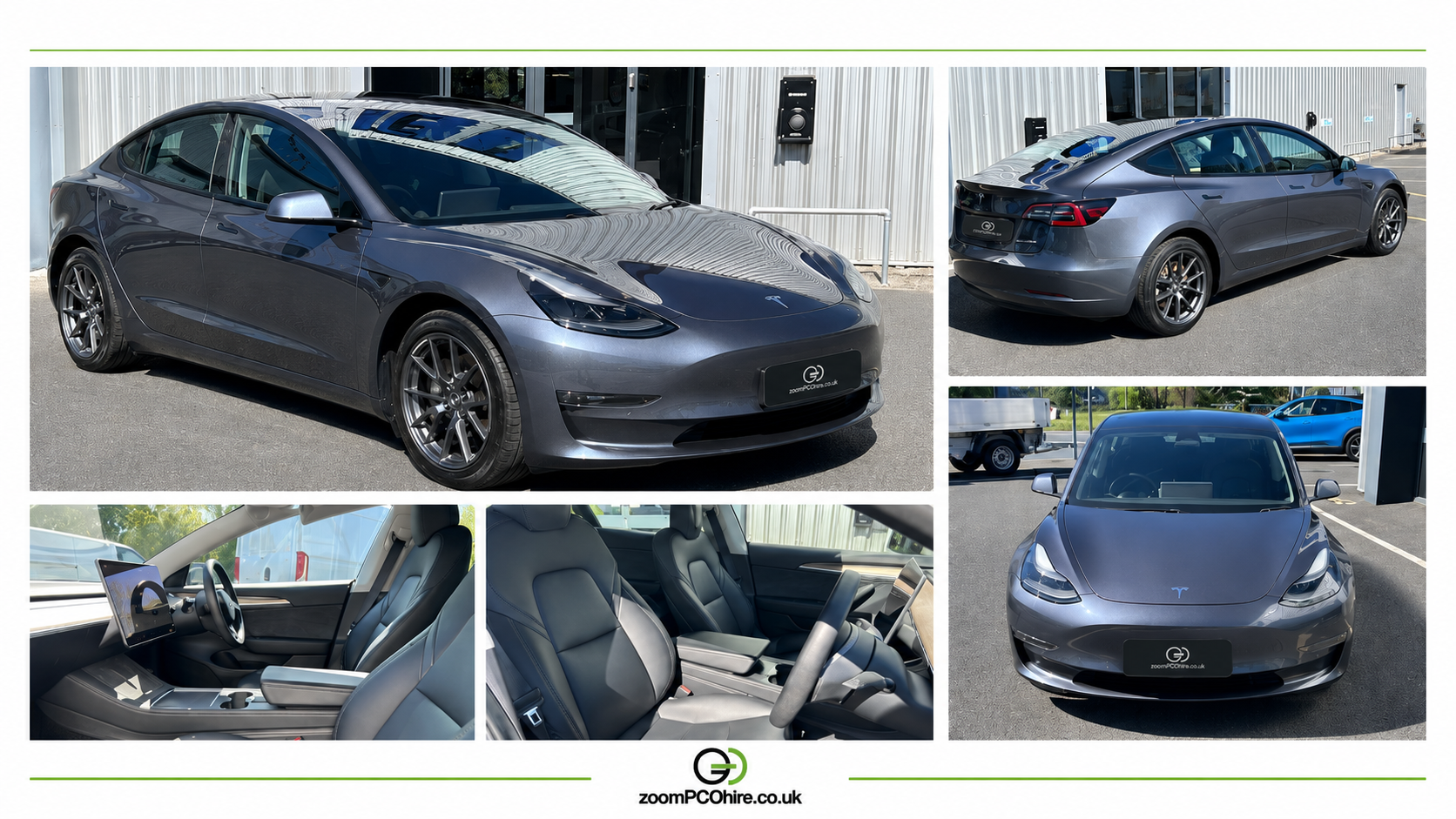
In this guide, we’ll explain the Tesla Model 3 Long Range in simple terms, the real costs that matter to PCO drivers, how to build a charging routine, and when it makes sense to go rent-to-buy versus starting on PCO car hire. If you want to view the exact car we’re talking about, see: Tesla Model 3 Long Range AWD
Tesla Model 3 Long Range AWD: what it is
The Tesla Model 3 Long Range AWD is a fully electric saloon designed for longer driving range and all-wheel drive traction. For private hire work, drivers usually care about these practical points:
- EV running costs can be lower than petrol/diesel when charging is priced well.
- Fast charging support helps you top up during breaks.
- Strong motorway comfort makes airport and intercity trips easier.
- Modern safety and driver assistance features can reduce fatigue on long shifts.
- Premium passenger feel can support better ratings and more comfort-style work (depending on platform eligibility).
Why PCO drivers choose the Long-Range version (not Standard Range)
Most drivers who pick Long Range do it for the buffer:
- More flexibility for long shifts and airport trips
- Less forced rapid charging mid-shift
- More confidence taking longer jobs without worrying about the battery
Real running costs for PCO drivers (what matters, not brochure talk)
The “real cost” of a Tesla for PCO work is not just your weekly payment. It’s your cost per mile, plus the time you lose charging.
Cost per mile: simple method
A basic way to estimate electricity cost per mile is:
Cost per mile = (price per kWh) ÷ (miles per kWh)
You don’t need perfect numbers. You need a realistic range based on your driving style (city vs motorway), weather, and how much heating you use.
Public charging vs home charging (what changes the maths)
Home or workplace charging is usually cheaper and more predictable.
Public rapid charging is convenient but can be expensive, and it can add queue time.
Two guides that break this down clearly:
Charging for PCO shifts: a simple routine that works
A Tesla works best when charging is part of your shift plan, not something you do in panic.
The 3-charger plan (primary, backup, emergency)
Save three charging options in your maps:
- Primary charger: reliable, close to your main working area
- Backup charger: second option nearby (in case the first is busy/down)
- Emergency rapid charger: for urgent top-ups only
Best times to charge if you’re a PCO driver
- Between peak blocks (not during peak demand)
- During a meal break
- After an airport drop-off (if you plan it)
- During naturally quiet hours in your area
Charging mistakes that kill profit
- Arriving at a charger at 5% battery (you lose control and overpay)
- Charging during the best earning window
- Relying on rapid charging every day with no routine
- Doing airport work without a return/charging plan
Range in real life: city work, motorway work, and winter
Real-world EV range changes daily. The biggest range reducers for private hire drivers are:
- Motorway speed
- Cold weather
- Cabin heating and window demisting
- Low tyre pressure
- Heavy stop-start driving with aggressive acceleration
How to protect range on long shifts
- Keep tyres properly inflated (helps range and safety)
- Drive smoothly (especially leaving junctions)
- Use seat heaters where possible instead of blasting heat constantly
- Keep a buffer (don’t run it too low before finding a charger)
Airport runs with a Tesla Model 3 (England strategy)
Tesla Model 3 Long Range can be great for airport work because it’s quiet, comfortable, and strong on motorways. But airport runs only stay profitable when you manage two things: luggage and return trips.
Is the boot big enough for airport work?
For many trips, yes. It’s fine for:
- 1–2 passengers with standard luggage
- Business travellers
- Couples and solo travellers
But if you often pick up:
- families with lots of bags
- big suitcases + pushchairs
- 4 passengers with heavy luggage
…then a bigger boot car (or SUV/estate/XL) can be easier day-to-day.
For airport tactics and return planning, use:
Return-trip tips (avoid dead miles)
Airport runs can become unprofitable if you return empty too often. Use:
- a short waiting limit (example: 15–25 minutes)
- reposition to a “ring” area (hotels, stations, business parks)
- time your return during quieter windows
To cut empty miles, read:
Uber/Bolt/PHV suitability: what categories does it suit?
The Tesla Model 3 Long Range is often used for:
- standard private hire trips
- comfort-style work
- business and airport transfers
- EV-focused categories (where available)
Important note: Uber category eligibility can vary by city and can change, so always check current requirements inside the app and platform guidance.
Tesla Model 3 Long Range: pros and cons for PCO drivers
Pros (PCO driver view)
- Low running cost potential with planned charging
- Strong long-shift comfort (quiet, smooth)
- Long range buffer reduces stress
- Modern feel that many passengers like
- Strong for airport and longer journeys
Cons (real driver issues)
- Public rapid charging can be expensive if it becomes your daily habit
- Charging time needs planning (time is money)
- Tyres can wear faster on heavier EV use (budget for it)
- Insurance can be higher for some drivers
- Not ideal for very luggage-heavy work compared to larger SUVs/estates/XL
Rent-to-buy vs PCO car hire for Tesla Model 3
Rent-to-buy is often best when:
- you’re full-time and stable
- you already know your working zones and mileage
- you have a reliable charging routine
- you want a long-term “career car” plan
PCO car hire is often best when:
- you want to test Tesla life first
- you’re unsure about charging access
- your work pattern may change (city vs airport vs XL)
- you want flexibility
View the car: Tesla Model 3 Long Range AWD
Quick table: who the Tesla Model 3 Long Range suits best
| Driver type | Is Model 3 Long Range a good fit? | Why | Watch-out |
|---|---|---|---|
| Full-time city driver | Yes | Strong efficiency potential and passenger comfort | Plan charging to avoid expensive rapid use |
| City + airport mix | Yes | Comfortable on motorways and good for longer trips | Keep boot clear and plan return trips |
| Airport heavy (large luggage often) | Sometimes | Great ride quality, but boot size can be limiting | Consider Model Y / estate / XL if needed |
| No home charger | Yes, with a routine | Works if you have reliable public charging strategy | Queues and rapid costs can reduce savings |
How Zoom PCO Hire helps you start with Tesla (soft sales)
At Zoom PCO Hire, we support PCO and PHV drivers across England with EV options that match real working patterns. If you’re considering a Tesla Model 3 Long Range AWD, we can help you choose the right plan based on your hours, routes, and charging access.
You can also view all the Tesla models we provide on PCO car hire and rent to buy option.
Final thoughts
The Tesla Model 3 Long Range AWD can be a strong PCO choice across England when your charging routine and shift type match the car. It suits drivers who want a premium EV feel, motorway comfort for airport work, and lower running costs when charging is planned. If you’re unsure, the smartest path is often: test the routine first, then commit long-term once you know it works.
Frequently Asked Questions
Is the Tesla Model 3 Long Range good for Uber and private hire work in England?
For many drivers, yes. It’s comfortable, quiet, and works well for city + airport shifts. Eligibility for specific Uber categories can vary by city, so always confirm in the app.
How much does it cost to charge a Tesla Model 3 for PCO driving?
It depends mainly on where you charge. Home/workplace charging is usually cheaper than public rapid charging. Use this guide for the real math: EV charging costs guide
Can I run a Tesla for PCO work if I don’t have a home charger?
Yes, but you need a routine. Use the 3-charger plan and avoid panic charging. This guide helps: No home charger EV guide.
Is Tesla Model 3 Long Range better than Standard Range for PCO drivers?
Many drivers prefer Long Range because the extra buffer reduces stress and forced charging during shifts, especially for airport and motorway work.
Is the Tesla Model 3 good for airport runs and luggage?
It’s good for many airport trips, especially 1–2 passengers with standard luggage. If you regularly carry families or very heavy luggage, you may prefer a larger boot car.
Does cold weather reduce Tesla range for private hire drivers?
Yes, EV range can drop in cold weather because heating and battery efficiency change. Keeping tyres correct and driving smoothly helps.
Is rent-to-buy a Tesla better than hiring one first?
Rent-to-buy often suits full-time drivers with a stable routine. Hiring first can be smarter if you’re still testing charging access and route patterns.
What are the common costs PCO drivers forget with Tesla’s?
Charging time (lost earning time), tyre wear, and public rapid charging costs are the big ones drivers often underestimate.
Will a Tesla help me get higher-rated trips (Comfort/Exec/Green)?
It can support better passenger experience, but category eligibility depends on platform rules in your area. Use this guide for strategy: Uber categories guide.
Which is better for PCO: Tesla Model 3 or Tesla Model Y?
Model 3 often wins on efficiency and driving feel. Model Y often wins on space and luggage. The best choice depends on your airport and family-trip volume.
