
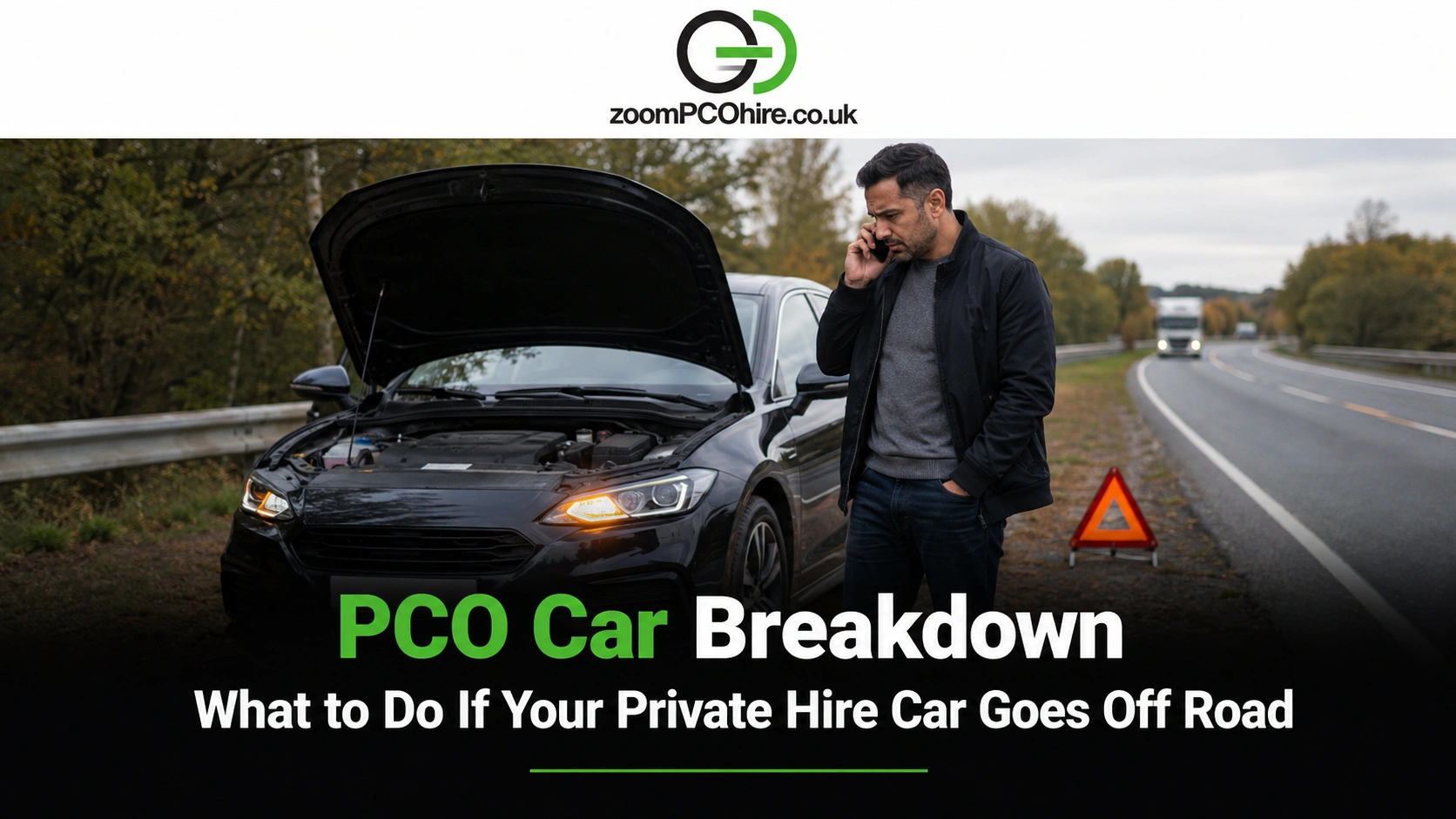
For a PCO or PHV driver, a breakdown is not just a vehicle issue. It can stop your earnings, delay passengers, affect ratings and create extra stress with your app, operator, hire provider or insurance company.
That is why every private hire driver should have a simple breakdown plan before anything goes wrong. Whether you drive for Uber, Bolt, a local operator or mixed PHV work across England, the priority is always the same: stay safe first, protect passengers, follow the correct process and keep clear records.
This guide explains what to do if your PCO car breaks down, what happens if a hire car is damaged or crashed, how replacement vehicles work, and what to ask before choosing PCO car hire or rent to buy.
Why breakdown planning matters for PCO and PHV drivers
A private hire vehicle is your working tool. When it stops, your income can stop too. A clear plan helps reduce panic and gets you back to work faster.
A breakdown can stop your income
If the car is off road, you may lose:
- daily trips
- peak-hour earnings
- airport jobs
- regular operator bookings
- app incentives
- weekly cash flow
This is why drivers should think about breakdown support before choosing a vehicle plan, not after the car has already failed.
It can affect passengers and ratings
If your car breaks down with a passenger inside, they may be late, worried or frustrated. But most passengers will respond better if you stay calm, explain clearly and follow the correct process.
Safety is more important than ratings. Uber’s own support guidance says drivers should not continue a trip if the vehicle has a mechanical failure due to safety reasons.
It can create extra costs
A breakdown can lead to more than one cost:
- recovery fee
- repair bill
- replacement vehicle cost
- lost working days
- extra travel home
- cancelled jobs
- insurance or excess issues
- ongoing hire or finance payment while the car is off road
Good records help you understand the full cost of downtime.
Immediate safety steps if your PCO car breaks down
Your first job is not to fix the car. Your first job is to keep yourself, passengers and other road users safe.
Move to a safe location if possible
If the car is still moving safely, try to reach a safe stopping place. This may be a car park, side road, service area, lay-by or another suitable place away from fast-moving traffic.
On motorways and high-speed roads, the Highway Code says the safest place to stop is a service area, and drivers and passengers should keep well away from moving traffic where possible.
Use hazard lights and keep visibility high
Use your hazard warning lights if your vehicle is causing an obstruction. In poor visibility or at night, visibility becomes even more important.
Do not stand in a dangerous position just to check the car. If the location is unsafe, move away from traffic first.
Keep passengers safe
If you have passengers in the vehicle, speak calmly and clearly. Do not make the situation sound worse than it is, but do not hide the problem either.
You can say:
“The car has developed a fault, so I’m going to stop safely and follow the correct process.”
A calm explanation helps passengers understand that you are handling the situation professionally.
Do not continue driving if the car feels unsafe
Stop and get help if you notice:
- brake problems
- steering issues
- overheating
- strong burning smell
- tyre damage
- serious warning lights
- loss of power
- unusual noise or vibration
- smoke from the engine or battery area
Continuing to work in an unsafe car can put everyone at risk and may create bigger repair problems.
What to do if you have a passenger in the car
A breakdown with a passenger inside needs extra care because you are responsible for handling the situation professionally.
Communicate calmly
Do not argue, panic or blame the passenger, app or road conditions. Keep your wording simple:
“I’m sorry, the vehicle has developed a fault. I’m stopping safely now and I’ll follow the app/operator process.”
This reassures the passenger and shows you are in control.
Follow the app or operator process
If you are working through Uber, Bolt or a private hire operator, follow the correct support process. Each platform or operator may handle breakdowns, cancellations and passenger continuation differently.
Uber’s support page for vehicle breakdowns asks drivers to share details so Uber can support them, and says not to continue a trip after mechanical failure for safety reasons.
Help the passenger continue their journey where appropriate
Depending on the situation, the passenger may need to rebook, contact the operator or follow the app’s process.
Do not promise anything you cannot control, such as a refund, replacement vehicle or arrival time. Keep it practical and professional.
Record what happened
After you are safe, make a note of:
- time
- location
- trip status
- passenger situation
- app/operator reference
- warning lights
- photos if relevant
- recovery or provider contact
These details may help if you need support from the platform, provider or insurer.
What to do if your hire car breaks down
Contact your PCO hire provider first
If the vehicle is hired, do not arrange major repairs yourself unless the provider tells you to. The car belongs to the provider, and your agreement may have specific rules for repairs, recovery and reporting.
Contact them and explain:
- where you are
- what happened
- whether passengers were inside
- whether the car is safe to move
- whether warning lights are showing
- whether recovery is needed
Ask what support is included
Before signing any PCO hire agreement, drivers should ask:
- Is breakdown cover included?
- Is recovery included?
- Who pays for repair?
- Is a replacement car available?
- Is support available outside office hours?
- Are tyres, brakes and servicing included?
- What happens if the car breaks down far from base?
- Is there any excess or driver responsibility?
This is important because not every provider offers the same level of support.
Keep proof of the breakdown
Keep:
- photos
- provider messages
- recovery receipt
- garage report
- repair invoice
- warning light photo
- mileage at the time
- time and location notes
These records help avoid confusion later.
What happens if your PCO car is off road for repairs?
If the car cannot be repaired quickly, the biggest issue becomes downtime. This is where drivers need to understand their provider, insurance and replacement vehicle options.
Understand the real downtime cost
Downtime can cost more than the repair itself.
For example, if the car is off road for several days, you may lose:
- daily earnings
- peak-time trips
- airport jobs
- app activity
- operator bookings
- weekly earning consistency
This is why a breakdown plan should include a backup option.
Ask about a replacement or courtesy car
Many drivers also ask: do you get a courtesy car if it’s not your fault?
The honest answer is: it depends. It may depend on your hire provider, insurance policy, accident circumstances, fault decision, vehicle availability and agreement terms.
Do not assume a courtesy car is automatic. Ask before signing:
- Is a replacement vehicle available?
- Is it included or charged separately?
- How quickly can it be arranged?
- Is it PHV-ready?
- Does it have corrected insurance?
- Can it be used on Uber, Bolt or your operator account?
Check if the replacement vehicle is PHV-ready
A replacement car is only useful if you can legally and practically work in it.
Check:
- private hire vehicle licence/plate
- insurance cover
- MOT/inspection status
- council/TfL suitability
- platform document requirements
- vehicle category acceptance
Do not start working in a replacement vehicle until the required documents and approvals are clear.
What documents and records should drivers keep after a breakdown
Records protect you. They help with provider communication, insurance, app support, repair tracking and your own cost planning.
Breakdown records
Keep:
- recovery paperwork
- provider messages
- photos of warning lights
- mileage
- location
- time/date
- garage report
- repair invoice
- replacement vehicle details
Accident records
Keep:
- photos of damage
- third-party details
- insurance claim reference
- police reference if applicable
- app/operator support reference
- witness details if available
- repair timeline
- provider instructions
Cost records
Track:
- recovery fee
- repair cost
- excess payment
- lost working days
- replacement vehicle cost
- extra travel cost
- parking or storage charges
Good records help you understand the true cost of downtime. They also connect naturally with your wider tax and profit tracking. For record keeping, use your PCO Driver Tax & Records Guide once it is live.
PCO breakdown action checklist
| Situation | What to do first | What to record |
|---|---|---|
| Car breaks down without passenger | Stop safely, use hazards and contact breakdown/provider support | Time, location, photos, recovery details and provider messages |
| Car breaks down with passenger | Keep passenger safe, explain calmly and follow app/operator process | Trip details, location, app/operator reference and notes |
| Warning light appears | Stop if unsafe and contact provider/mechanic before continuing | Photo of warning light, mileage and time |
| Accident or crash | Check safety, contact emergency services if needed and inform insurer/provider | Photos, third-party details, claim reference and incident notes |
| Car off road for repairs | Ask about replacement vehicle and confirm PHV/platform suitability | Repair timeline, invoices, replacement vehicle documents and lost working days |
Common mistakes PCO drivers make during breakdowns
Continuing to drive an unsafe car
If the car is not safe, stop. No trip is worth a serious accident.
Not telling the provider quickly
If the car is hired or on rent-to-buy, late reporting can create problems. Contact the provider as soon as you are safe.
Forgetting to record photos and receipts
Photos, receipts and notes help prove what happened and what costs were involved.
Assuming a courtesy car is automatic
Replacement support depends on the provider, insurance, contract and situation. Always check.
Using a replacement vehicle before documents are approved
A replacement car must still be suitable for PHV work. Check the documents before working.
Ignoring small faults until they become major
Warning lights, tyre issues and brake noise should be checked early.
Not checking breakdown terms before signing
Many drivers focus only on weekly price. Breakdown support, replacement options and repair responsibility can be just as important.
Final thoughts
A PCO car breakdown can stop your income, but a clear plan can reduce stress and downtime. Stay safe first, protect passengers, follow the correct provider or platform process, and keep proper records.
Before choosing any vehicle plan, ask what happens if the car breaks down, crashes or goes off road. Zoom PCO Hire can help drivers compare PCO car hire and rent to buy options across England.
Frequently Asked Questions
What should I do if my PCO car breaks down?
Move to a safe place, if possible, use hazard lights, keep passengers safe, contact breakdown support or your provider, and follow the app or operator process. Do not continue driving if the car feels unsafe.
What should I do if my hire car breaks down?
Contact your PCO hire provider as soon as you are safe. Follow their repair and recovery process, keep photos and receipts, and do not arrange major repairs yourself unless instructed.
What happens if I crash my PCO hire car?
Stop safely, check for injuries, contact emergency services if needed, inform your insurer and hire provider, take photos, collect details and follow the app/operator process. GOV.UK says accidents involving damage or injury require drivers to share key details and report to police within 24 hours if details were not given at the scene.
Do you get a courtesy car if your PCO car is off road?
It depends on your provider, insurance, agreement terms, vehicle availability and the reason the car is off road. Do not assume a courtesy car is automatic. Always check your agreement before signing.
Can I keep working if my PCO car is being repaired?
Only if you have access to another PHV-ready vehicle with correct licensing, insurance and platform/operator approval. Do not use a replacement car for private hire work until the documents are clear.
Who pays for repairs on a PCO hire car?
It depends on the hire agreement, the cause of the damage, wear-and-tear rules, insurance terms and driver responsibility. Ask your provider for the exact breakdown and accident policy.
What should I do if my car breaks down with a passenger inside?
Stop safely, explain calmly, keep the passenger safe, follow the app or operator process, and contact support. Safety comes before completing the trip.
Do I need to report a breakdown to Uber, Bolt or my operator?
Yes, if the breakdown affects an active trip, passenger journey, account documents or vehicle availability. Uber has a support process for reporting vehicle breakdowns, and advises drivers not to continue a trip after mechanical failure for safety reasons.
What records should I keep after a breakdown or accident?
Keep photos, time, location, recovery paperwork, provider messages, repair invoices, insurance claim references, app/operator references and notes about lost working days.
How can PCO drivers reduce vehicle downtime?
Do daily checks, track warning signs early, keep up with servicing, check tyres and brakes, report faults quickly and choose a vehicle plan with clear breakdown and replacement support.
